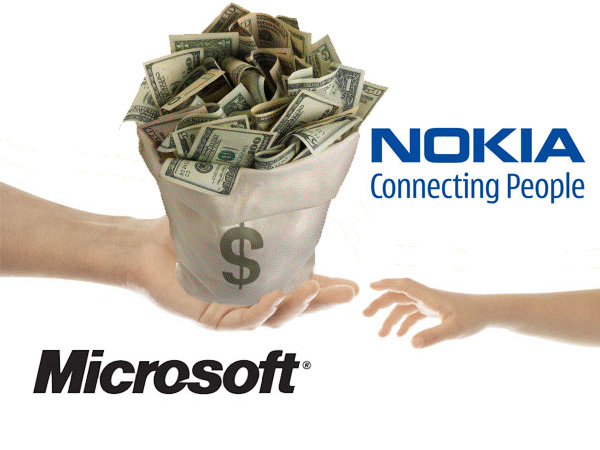
Well, that didn't take long to happen. Back in 2011 when Nokia announced its plans to drop Symbian and Meego as its smartphone OSes and partner with Microsoft to stand behind Windows Phone, a lot of people said that it was Microsoft pulling the strings through Nokia's new CEO (and former Microsoft employee), Stephen Elop. Some even predicted that eventually business would go so badly that Nokia would eventually have to sell out to Microsoft and here we are two years later with the stunning news that Microsoft is concluding its plans to purchase Nokia's Devices and Services division for a whooping $7.17 Billion
Showing posts with label Nokia. Show all posts
Just a week to go to the release of one of the most anticipated movies of the year: Man of Steel. Directed by Zack Snyder (300, The Watchmen) and produced by Christopher Nolan (The Dark Knight Rises, Inception), this movie gives a breath of fresh air to the story of one of the greatest superheroes of all time, Superman.
The internet was already flooded with leaked photos of the phone and its specs but yesterday at a launch event that took place in two cities (London and New York) at the same time, HTC confirmed its latest flagship device, The HTC One. If you ask me I'd say that holding 2 events on different continents just to launch one device doesn't make much sense, but what do I know about product launches.
With its 4.7" 1080p Super LCD3 screen, 1.7Ghz quad-core Snapdragon 600 processor and 2 GB RAM, the HTC One is more than ready to claim the title of Superphone champion for 2013 but its still to early in the year to tell. One look at the phone and you immediately see its resemblance to recently released Blackberry Z10. Coincidence or Part of the plan?
Source: The Next Web 
We often hear about the potential for smartphones in emerging markets and, while it’s true that sales are growing exponentially in places like Asia, not everyone is ready, able or willing to buy an iPhone 5 or Samsung Galaxy S III.
A new device announced by Samsung last week represents yet another important push towards bringing an affordable smartphone experience to emerging markets, where mobile is set to become the primary access point to the Internet for millions.
Samsung unveiled its Rex series last week. The four phones – Rex 90, Rex 80, Rex 70, and Rex 60 — are Java-based devices, which run Samsung’s own TouchWiz interface. They come integrated with a range of chat services — including Samsung’s WhatsApp-rival ChatOn, Yahoo Messenger, Google Talk — while support for Facebook, Twitter and Google+ is also included. Opera Mini and Access NF are the pre-installed Web browsers.
While prices haven’t been released, the phones are pretty attractive. The Rex 90 is the highest-end device, sporting a 3.5-inch screen, 3.2 megapixel camera, BlueTooth, WiFi, 10MB of onboard memory and more. The lower-end phones each include a little less, with the Rex 60 offering a 1.3 megapixel snapper, but it houses an additional 20MB of memory and also includes WiFi connectivity.
The phones are available as single-SIM or dual-SIM devices. The latter is popular in India and other markets where cross-network calls cost extra, and carrying at least two pre-paid SIMs can save money.
The new phones don’t have a launch date but they follow the same path as Nokia’s Asha devices, a series of low-cost handsets that launched in 2011 with the aim of bridging the gap between feature phones and smartphones for mass market users in countries like India. At the time, I was pretty enthused by the concept, and I think that Rex is another important move to help bring an affordable experience and Internet access to emerging market consumers.
Pricing remains a huge barrier for smartphone adoption. In many countries in Asia, for example, the subsidies that allow a smartphone to be bought for ‘free’ (in exchange for a long-term contract with an operator) in the US or Europe don’t exist, and more than 90 percent of phones operate on pay-as-you go contracts. That makes shelling out for an iPhone or Galaxy S III upwards of $750.
That’s a tough ask for consumers in the West, let alone working class people in Indonesia, for example. The saddest part is that the folks that can’t afford the phones are the ones who could see the biggest impact from them, since they’ve likely not used the Internet much (if at all) and are unaware of the potential for learning, gathering information, communicating, etc.
Nokia said it “exceeded expectations” when it sold 4.1 million Lumia handsets in a “solid” Q4 2012, but the Finnish firm actually sold 9.3 million Asha smartphones during the period — and that doesn’t even include Asha feature phones. While Nokia slipped to its lowest overall handset market share ever — 18 percent in Q4, according to Gartner – the research firm did note that sales of the Asha range, which includes touch screen and keyboard devices, were impressive.

It’s clear then, that the ‘smart feature phone’ genre (as Samsung bills Rex) is catching on, and the addition of devices from Samsung will only spur further development.
Samsung’s brand presence is impressive in Asia — where its devices are challenging the iPhone at the high-end — and, alongside Nokia, the Korean firm is widely known and trusted in many emerging markets. That’s important and it is likely to give its Rex range a platform to gain traction among a new slice of the mobile phone buying public, and open the potential of the Web to more people.
Related: Nokia unveils new Asha 310 with dual-SIM and WiFi interoperability, available later this quarter for $102
Headline image via NOAH SEELAM/Getty Images, others via Samsung and Nokia

We often hear about the potential for smartphones in emerging markets and, while it’s true that sales are growing exponentially in places like Asia, not everyone is ready, able or willing to buy an iPhone 5 or Samsung Galaxy S III.
A new device announced by Samsung last week represents yet another important push towards bringing an affordable smartphone experience to emerging markets, where mobile is set to become the primary access point to the Internet for millions.
Samsung unveiled its Rex series last week. The four phones – Rex 90, Rex 80, Rex 70, and Rex 60 — are Java-based devices, which run Samsung’s own TouchWiz interface. They come integrated with a range of chat services — including Samsung’s WhatsApp-rival ChatOn, Yahoo Messenger, Google Talk — while support for Facebook, Twitter and Google+ is also included. Opera Mini and Access NF are the pre-installed Web browsers.
While prices haven’t been released, the phones are pretty attractive. The Rex 90 is the highest-end device, sporting a 3.5-inch screen, 3.2 megapixel camera, BlueTooth, WiFi, 10MB of onboard memory and more. The lower-end phones each include a little less, with the Rex 60 offering a 1.3 megapixel snapper, but it houses an additional 20MB of memory and also includes WiFi connectivity.
The phones are available as single-SIM or dual-SIM devices. The latter is popular in India and other markets where cross-network calls cost extra, and carrying at least two pre-paid SIMs can save money.
The new phones don’t have a launch date but they follow the same path as Nokia’s Asha devices, a series of low-cost handsets that launched in 2011 with the aim of bridging the gap between feature phones and smartphones for mass market users in countries like India. At the time, I was pretty enthused by the concept, and I think that Rex is another important move to help bring an affordable experience and Internet access to emerging market consumers.
Pricing remains a huge barrier for smartphone adoption. In many countries in Asia, for example, the subsidies that allow a smartphone to be bought for ‘free’ (in exchange for a long-term contract with an operator) in the US or Europe don’t exist, and more than 90 percent of phones operate on pay-as-you go contracts. That makes shelling out for an iPhone or Galaxy S III upwards of $750.
That’s a tough ask for consumers in the West, let alone working class people in Indonesia, for example. The saddest part is that the folks that can’t afford the phones are the ones who could see the biggest impact from them, since they’ve likely not used the Internet much (if at all) and are unaware of the potential for learning, gathering information, communicating, etc.
Nokia said it “exceeded expectations” when it sold 4.1 million Lumia handsets in a “solid” Q4 2012, but the Finnish firm actually sold 9.3 million Asha smartphones during the period — and that doesn’t even include Asha feature phones. While Nokia slipped to its lowest overall handset market share ever — 18 percent in Q4, according to Gartner – the research firm did note that sales of the Asha range, which includes touch screen and keyboard devices, were impressive.
It’s clear then, that the ‘smart feature phone’ genre (as Samsung bills Rex) is catching on, and the addition of devices from Samsung will only spur further development.
Samsung’s brand presence is impressive in Asia — where its devices are challenging the iPhone at the high-end — and, alongside Nokia, the Korean firm is widely known and trusted in many emerging markets. That’s important and it is likely to give its Rex range a platform to gain traction among a new slice of the mobile phone buying public, and open the potential of the Web to more people.
Related: Nokia unveils new Asha 310 with dual-SIM and WiFi interoperability, available later this quarter for $102
Headline image via NOAH SEELAM/Getty Images, others via Samsung and Nokia
About Me
Labels
Action
(3)
AFCON
(1)
Airtel
(1)
android
(7)
app store
(1)
Apple
(1)
Asha
(2)
Batman
(1)
Batmobile
(1)
BB10
(2)
Beats Audio
(1)
Blackberry
(5)
BlueStacks
(1)
Bungie
(1)
burkina faso
(1)
call of duty
(2)
Cars
(1)
Christopher Nolan
(2)
Chrome OS
(1)
Chromebook
(1)
David S. Goyer
(1)
DC
(1)
DC Comics
(1)
Dumbphones
(1)
E3
(2)
EA
(1)
Etisalat
(1)
Fantasy
(2)
Fast 6
(1)
Fast and Furious
(1)
football
(1)
fps
(2)
gaming
(18)
geek
(11)
geekisms
(6)
Globacom
(1)
Google
(4)
Halo
(1)
HTC One
(1)
html5
(1)
India
(1)
infographic
(1)
Insomnia
(1)
Internet
(2)
Introduction
(1)
iOS
(1)
iPhone
(2)
iPhone 5
(1)
Jumia
(1)
LG
(2)
Linux
(4)
LoTR
(1)
Lumia
(1)
Mac
(2)
Machinima
(1)
Map Maker
(1)
Maps
(2)
Microsoft
(7)
Mortal Kombat
(1)
movie
(1)
movies
(16)
MTN
(1)
native apps
(1)
nerd
(1)
nerdisms
(1)
Nexus 10
(1)
Nexus 4
(1)
Nexus 7
(1)
Nigeria
(3)
Nokia
(4)
Novels
(3)
PC
(3)
Peter V. Brett
(1)
Play Store
(1)
Playstation
(4)
Privacy
(1)
PS Vita
(1)
PS3
(3)
PS4
(2)
PSN
(2)
PSP
(1)
push notifications
(1)
Rex
(1)
Samsung
(1)
Sci-Fi
(6)
Sense
(1)
Smartphones
(6)
Snapdragon
(2)
Sony
(4)
Square Enix
(1)
Star Trek
(1)
Steam
(2)
super eagles
(1)
Superman
(2)
supernatural
(1)
Surface
(1)
Surface Pro
(2)
Tablets
(1)
The Demon Cycle
(1)
thriller
(1)
trailers
(1)
Tumbler
(1)
tv series
(2)
Ubisoft
(1)
Ubuntu
(1)
Valve
(2)
Valve Box
(1)
Valve OS
(1)
Wii U
(1)
windows
(1)
Windows 8
(3)
windows phone
(4)
Xbox
(4)
Xbox 360
(3)
Xbox Live
(2)
Xbox One
(4)
YouTube
(1)
Z10
(3)
Zack Snyder
(1)
Powered by Blogger.
